


The EPA’s 2026 reconsideration rule gives supermarket refrigeration buyers more time, not a free pass. Published on 26 May 2026 at 91 FR 31284 and effective 27 July 2026, it replaces the single 2027 GWP limit for supermarket systems with an interim limit of 1,400 from 1 January 2027 and a final limit of 150 or 300 from 1 January 2032. For a store opening in 2027, the practical question is not whether the system can meet 150 GWP. It is whether the system meets 1,400, and whether the design can reach 150 or 300 later without a second rip-out.
1. What the rule changes
The 2023 Technology Transitions rule set a single GWP limit of 150 or 300 for supermarket systems from 1 January 2027. The 2026 reconsideration keeps the same final numbers but moves them to 1 January 2032. In between, from 1 January 2027, supermarket systems face an interim limit of 1,400.
The rule is a set of equipment limits, not a blanket requirement to replace every refrigeration system in every store. The compliance question depends on the equipment, the date it is placed into service and the way the system is classified. That is why the first step is not a refrigerant purchase. It is a written statement of which limit applies to the project.
| Compliance date | GWP limit | Applies to |
|---|---|---|
| 1 January 2027 | 1,400 | Supermarket systems |
| 1 January 2032 | 150 | Supermarket systems with a refrigerant charge of 200 lb or more |
| 1 January 2032 | 300 | Systems below 200 lb, or the high-temperature side of a cascade system |
The 200 lb threshold is the detail that catches teams out. A small system and a large system can face different final limits, and a cascade system can split the limit between its high-temperature and low-temperature sides. The design charge, not the store size, is the number to confirm.
2. The two dates that matter
The 2027 date affects the next new store or major remodel. The 2032 date affects the refrigerant choice made in that project. If a system is designed only to scrape under 1,400, it may need a second replacement when the limit drops to 150 or 300. That is the cost the interim rule is trying to avoid.
For a retailer with a five-year capital plan, the useful question is: which systems in the estate will reach the end of their service life before 2032, and which will still be running? A system that will be replaced in 2030 does not need a 2032 conversion plan. A system installed in 2027 probably does.
A 2027 system that meets 1,400 but cannot be converted to 150 or 300 is a stranded asset. Ask the supplier what the conversion path is, what it costs and which components would have to change.
3. What 1,400 means in practice
GWP is a relative measure of a refrigerant’s climate impact. A limit of 1,400 does not ban HFCs. It excludes the highest-GWP blends and leaves room for lower-GWP HFCs, HFO blends and natural refrigerants. R-404A and R-507A, both common in older supermarket systems, sit well above the limit. Lower-GWP options include R-448A and R-449A, CO2, ammonia and propane. Each comes with a different pressure, charge, safety classification and service requirement.
The trade-offs are real. CO2 systems run at high pressure and need experienced service technicians. Propane has a charge limit and an ignition-risk classification. Ammonia is efficient but is usually confined to plant rooms and industrial sites. A lower-GWP HFC blend may be the simplest choice for a small store, but it may not be the lowest-lifecycle-cost choice for a large one.
The specification should state the refrigerant, the design charge, the GWP value and the compliance date the system is intended to meet. “Low GWP” is not a specification. It is a marketing phrase.
4. New store versus retrofit
A new system and a retrofit are different projects. A new system can be designed around the refrigerant from the start: different pressures, different pipe sizes, different leak detection, different controls. A retrofit has to work with the existing compressors, heat exchangers, pipework and electrical supply. The refrigerant may not be a drop-in, and the lubricant may have to change.
That does not make retrofits impossible. It makes them an engineering exercise. A credible retrofit proposal should cover the compressor compatibility, lubricant, seals, pressure controls, leak detection, safety classification, performance at design ambient and the warranty position. A proposal that lists only a refrigerant name and a price is not enough.
5. Five questions for a refrigeration supplier
- Which limit does this system meet, and on what date? Ask for the GWP value at the design charge and the specific compliance path, not a general statement about the regulation.
- What is the design charge in pounds? The 150 limit applies at 200 lb or more; the 300 limit applies below that threshold or on the high-temperature side of a cascade.
- Is this a new system or a retrofit? The answer changes the components, the documentation and the risk.
- What happens at the 2032 limit? Can the system be converted, or does it need replacement? What would the conversion involve?
- Who services it in our market? A refrigerant that no local technician can service is a maintenance liability, not a compliance solution.
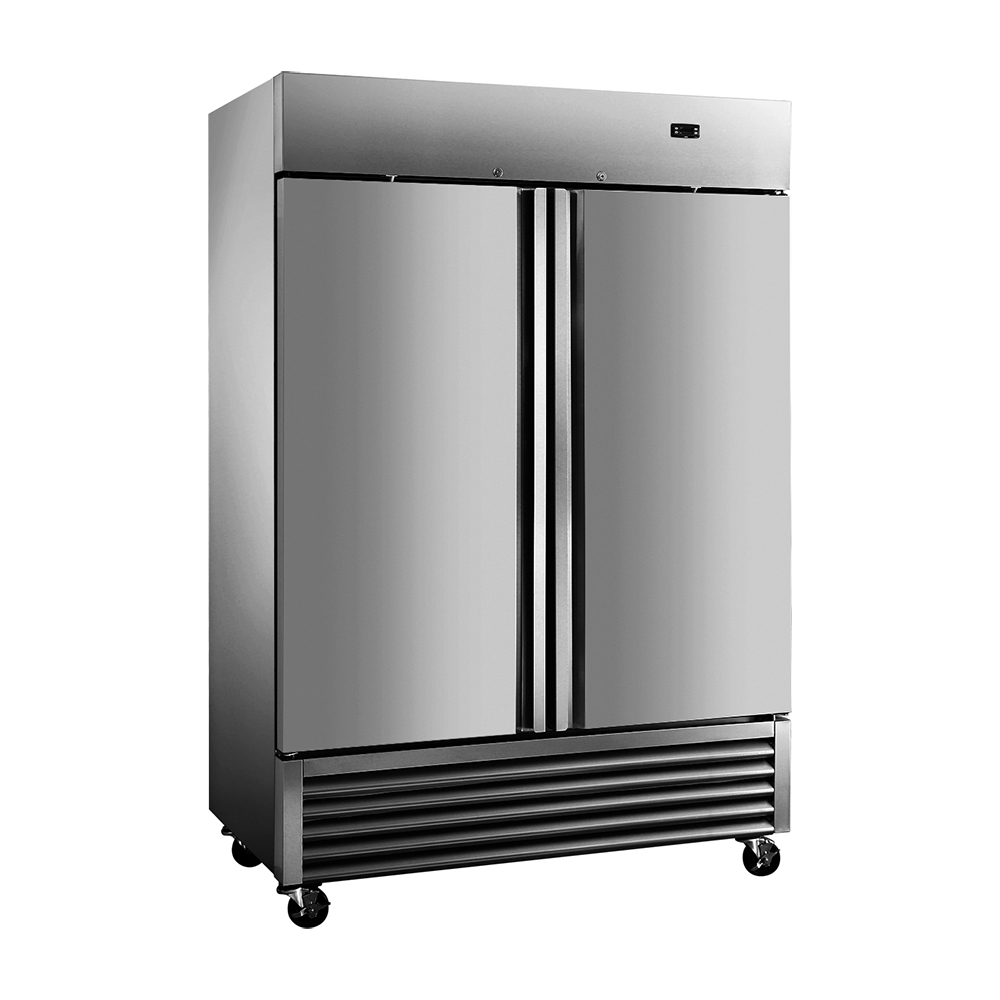
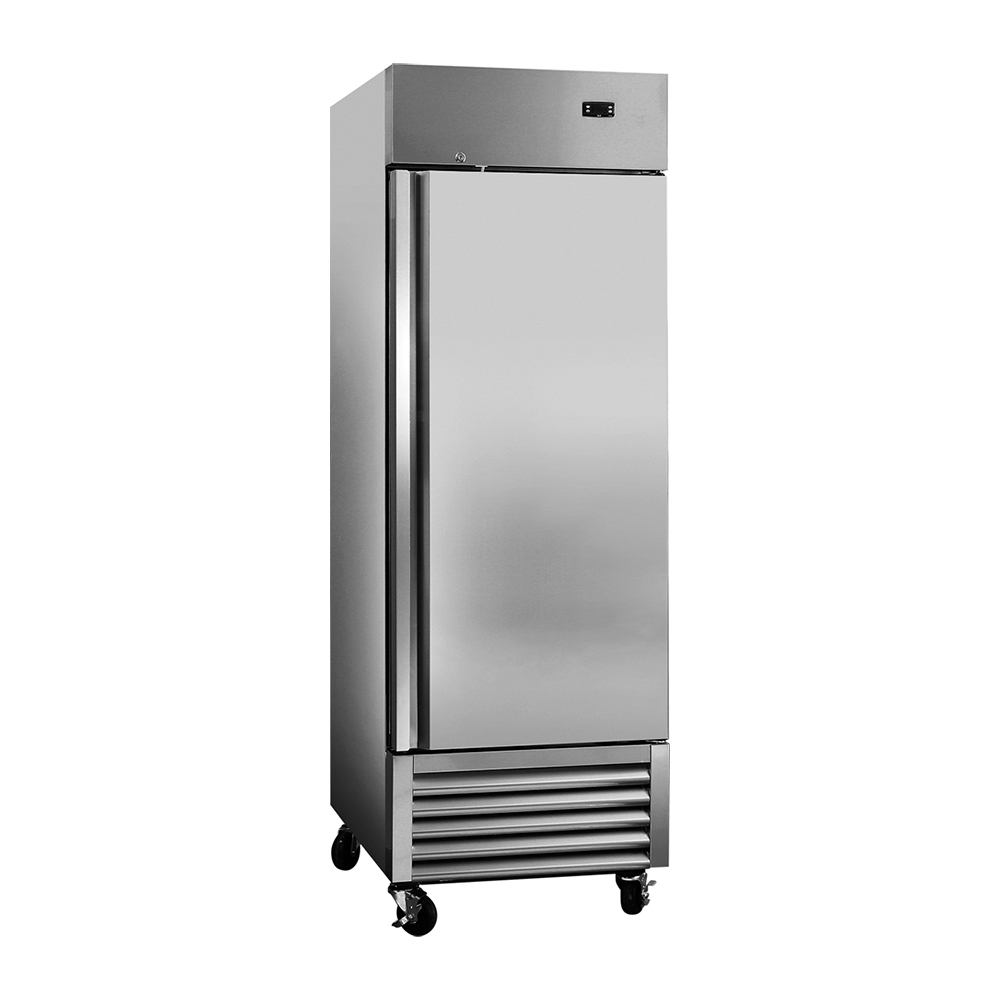
For the equipment side, compare the commercial refrigeration range and the supermarket chiller range by system architecture, not only by case size. A two-door upright chiller for fresh produce and a remote vertical multi-deck chiller may sit in the same store but use different refrigerant circuits and different service access.
6. What to do with an existing system
The 2027 date is not a deadline to replace every existing system. The useful work now is a refrigerant inventory. For each system, record the refrigerant, the charge, the age, the leak history, the control system, the parts availability and the planned replacement date. That inventory shows which systems are candidates for a retrofit, which should be replaced at the next remodel and which can run to the end of their life.
Leak tightness deserves as much attention as GWP. A high-GWP system that leaks is worse than a lower-GWP system that is maintained. Add leak detection, regular leak checks and a repair log to the maintenance plan. The climate impact of a refrigerant is measured in the atmosphere, not on the nameplate.
7. Supermarket HFC rule FAQ
Does the 2026 rule ban R-404A?
It sets GWP limits that high-GWP refrigerants cannot meet for new supermarket systems. It does not require every existing system to be replaced. The compliance obligation depends on the equipment and the date it is placed into service.
Is 2027 still a compliance date?
Yes. The 2027 limit is 1,400 GWP. The 150 or 300 limit moves to 2032.
What is the 2032 limit?
150 GWP for supermarket systems with a refrigerant charge of 200 lb or more, and 300 GWP for systems below 200 lb or on the high-temperature side of a cascade system.
Can we retrofit an existing system instead of replacing it?
Sometimes. A retrofit needs an engineering review of the compressor, lubricant, seals, pressure controls, leak detection and safety classification. The refrigerant may not be a drop-in.
Does the rule apply to plug-in cases?
The rule has specific equipment categories and definitions. Plug-in equipment may follow a different path from a supermarket system. Confirm the category for the equipment you are buying rather than assuming the supermarket limit applies.
Sources
- U.S. Environmental Protection Agency, Phasedown of Hydrofluorocarbons: Reconsideration of Certain Regulatory Requirements Promulgated Under the American Innovation and Manufacturing Act, 91 FR 31284, 26 May 2026.
- Lubin PLA, EPA’s 2026 Technology Transitions Rule and Refrigeration Oils, 2026.