


OSHA’s revised National Emphasis Program for warehousing took effect on 31 July 2026. The headline change is that high-hazard retail formats are no longer targeted. The practical change for warehouse operators is smaller than the headline suggests: comprehensive inspections continue, and damaged, overloaded or unsecured racking can still be cited.
1. What changed on 31 July 2026
OSHA updated Compliance Directive CPL-03-00-026, the National Emphasis Program on Warehousing and Distribution Center Operations. The renewed program keeps comprehensive inspections for seven warehousing and distribution classifications, but narrows the list of employers it targets and removes two automatic screening requirements.
| Element | 2023 NEP | Renewed 2026 NEP |
|---|---|---|
| Retail targeting | Included high-hazard retail such as home centers, hardware stores, supermarkets, warehouse clubs and supercenters | Those retail settings are removed |
| Heat and ergonomic screening | Mandatory screening during covered inspections | Automatic screening removed; both remain listed hazards and may still be examined |
| Covered industries | Warehousing, distribution, courier and postal operations | Same seven NAICS classifications, including general, refrigerated and farm product warehousing |
| Inspection scope | Comprehensive safety inspections | Comprehensive inspections continue |
| Duration | Original program launched in 2023 | Effective 31 July 2026 for five years; coverage extended through at least 2031 |
The seven covered classifications are postal processing and distribution centers (491110), couriers and express delivery (492110), local messengers and local delivery (492210), general warehousing and storage (493110), refrigerated warehousing and storage (493120), farm product warehousing and storage (493130), and other warehousing and storage (493190). OSHA’s list is based on the establishment’s actual operations, so a company should review each site rather than rely on its primary corporate code.
Supermarkets and home centers are out of the NEP’s targeting list, but the program still authorizes broad inspections in covered warehouses. Heat and ergonomic hazards were removed from mandatory screening, not from the list of hazards OSHA may examine.
2. Why pallet racking is still in the picture
Pallet racking does not have its own OSHA standard. That does not make it invisible during an inspection. OSHA can cite damaged, overloaded or unsecured racking under the General Duty Clause, and racking conditions observed in plain view can be added to the scope of a warehousing inspection.
The renewed directive expressly lists material handling and storage among the hazards to evaluate, alongside powered industrial trucks, walking-working surfaces, blocked aisles, means of egress, fire protection and struck-by or caught-in situations. A leaning upright, a missing beam lock or a beam level moved without engineering review is exactly the kind of condition that fits those categories.
Hodgson Russ makes the point directly in its October 2026 alert: the NEP does not specifically target racking, but OSHA can issue General Duty Clause citations for damaged, overloaded or unsecured racking, including hazards seen in plain view. The practical lesson is that rack condition is part of the same inspection as forklift traffic and aisle housekeeping.
3. Four conditions to fix before a walkthrough
Impact damage to uprights and braces
Look at the lower 1.5 meters of every upright, especially at aisle corners, end frames and pick faces. Dents, bends, twisted flanges, cracked welds, missing braces and loose base plates are structural findings, not cosmetic ones. A column protector that hides a bent upright makes the problem harder to see; it does not restore capacity.
Unengineered changes to beam levels
Removing a beam to fit a taller pallet is one of the most common warehouse shortcuts, and one of the most expensive. Rack capacity is a system value: changing the beam spacing changes the load path. RMI’s MODEX 2026 session gave the example of a system reduced from 30,000 pounds to 12,000 pounds after a beam level was removed. Any change to beam levels, frame spacing or accessories should go through the rack manufacturer or a qualified engineer before it is loaded.
Anchors, shims and alignment
Check that base plates sit flat, shims are present where the slab is not level, and anchors are straight and fully engaged. RMI’s inspection guidance flags angled anchors and excess thread above the nut as warning signs, and notes that anchors placed too close together can fracture the slab. These are installation-quality issues that may not show up until the rack is under load.
Cosmetic repairs that cover damage
A replacement column protector, a painted-over bend or a field-welded brace can make a damaged rack look serviceable. The correct response to damage is to unload the affected bay, prevent use and repair or replace the component to the manufacturer’s specification. If the repair is not documented, assume it has not been engineered.
4. The evidence file to keep
An inspection goes more smoothly when the rack system can be explained from documents rather than memory. Keep the following in one folder, indexed by rack line or bay number.
| Document | Why it matters | What good looks like |
|---|---|---|
| As-built layout and load signs | Shows the approved configuration and capacity | Current drawing, bay numbering and load signs that match the installed rack |
| Inspection records | Shows the system is monitored over time | Date, inspector, type of inspection, findings and photos |
| Repair records | Separates a repair from a cosmetic cover-up | Component replaced, method, source and sign-off |
| Reconfiguration approvals | Explains why the current layout differs from the original | Engineering review or manufacturer confirmation before reloading |
| Training and reporting records | Shows operators know how to report damage | Forklift and rack-awareness training, plus a simple damage-report route |
| Aisle and egress plan | Connects rack layout to traffic and exit routes | Marked aisles, clear exit paths and no storage in designated no-stock zones |
These records are not a substitute for fixing a hazard. They are evidence that the system is being managed as designed, which is the point an inspector will test.
5. A practical pallet rack checklist
Use a documented interval based on traffic, damage history and the manufacturer’s instructions. High-traffic pick faces and end frames usually need more attention than a static reserve aisle. The checks below are a starting point for a walkthrough, not a substitute for an engineering assessment.
| Check | What to look for |
|---|---|
| Uprights | Dents, bends, cracks, twisted flanges, missing or loose braces |
| Beams | Displaced or missing beam locks, bent beams, overload, unauthorised level changes |
| Base plates | Anchors straight and tight, shims in place, concrete sound around the anchor |
| Alignment | Rack line straight and plumb, frames not pushed out of line by impacts |
| Guards | Column protectors and end guards present, secure and not hiding damage |
| Loads | Pallets stable, within the posted capacity, no overhang into aisles |
| Aisles | Clear width maintained, no stored product obstructing traffic or egress |
| Signage | Load signs legible and matched to the bay; no missing signs |
| Repairs | Field repairs documented; no painted-over or guarded-over damage |
| Reporting | Staff know how to tag a damaged bay and who responds |
A damaged bay should be unloaded and taken out of service before a repair is scheduled. Tagging it and continuing to pick from it defeats the purpose of the inspection.
6. Specify racking that is easier to maintain
The cheapest rack to inspect is the one whose capacity, parts and configuration are obvious. When specifying a new run or replacing a damaged bay, ask for:
- Bay-level load ratings that reflect the actual beam spacing, not a generic frame capacity.
- Beam locks and safety clips that can be checked visually without dismantling the rack.
- Clear load signs at the end of each run, with a bay numbering system that matches the drawing.
- Replaceable uprights and standard beam sections, so a repair does not require a custom fabrication.
- Column protectors and end guards sized for the traffic, with a fixing method that allows inspection behind them.
- Anchoring and shimming instructions for the actual slab, including the anchor type and edge distance.
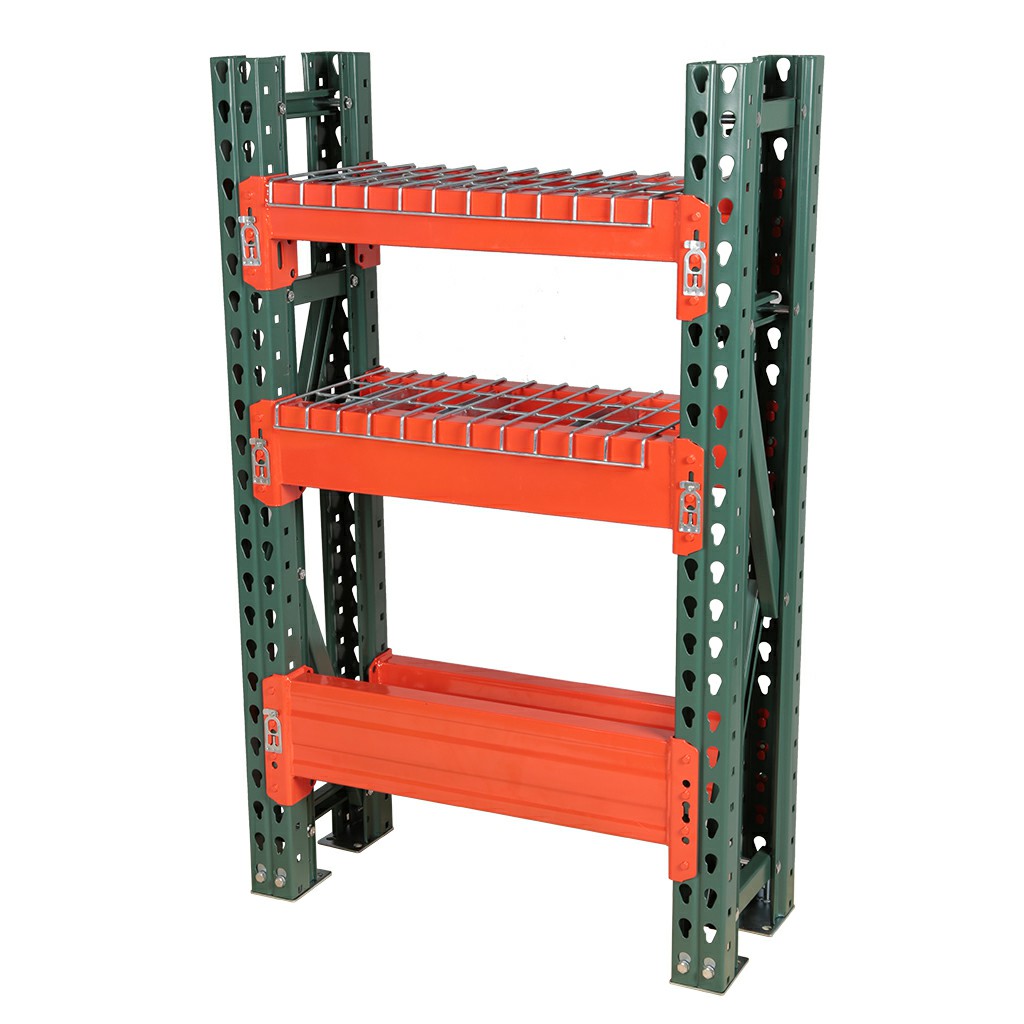
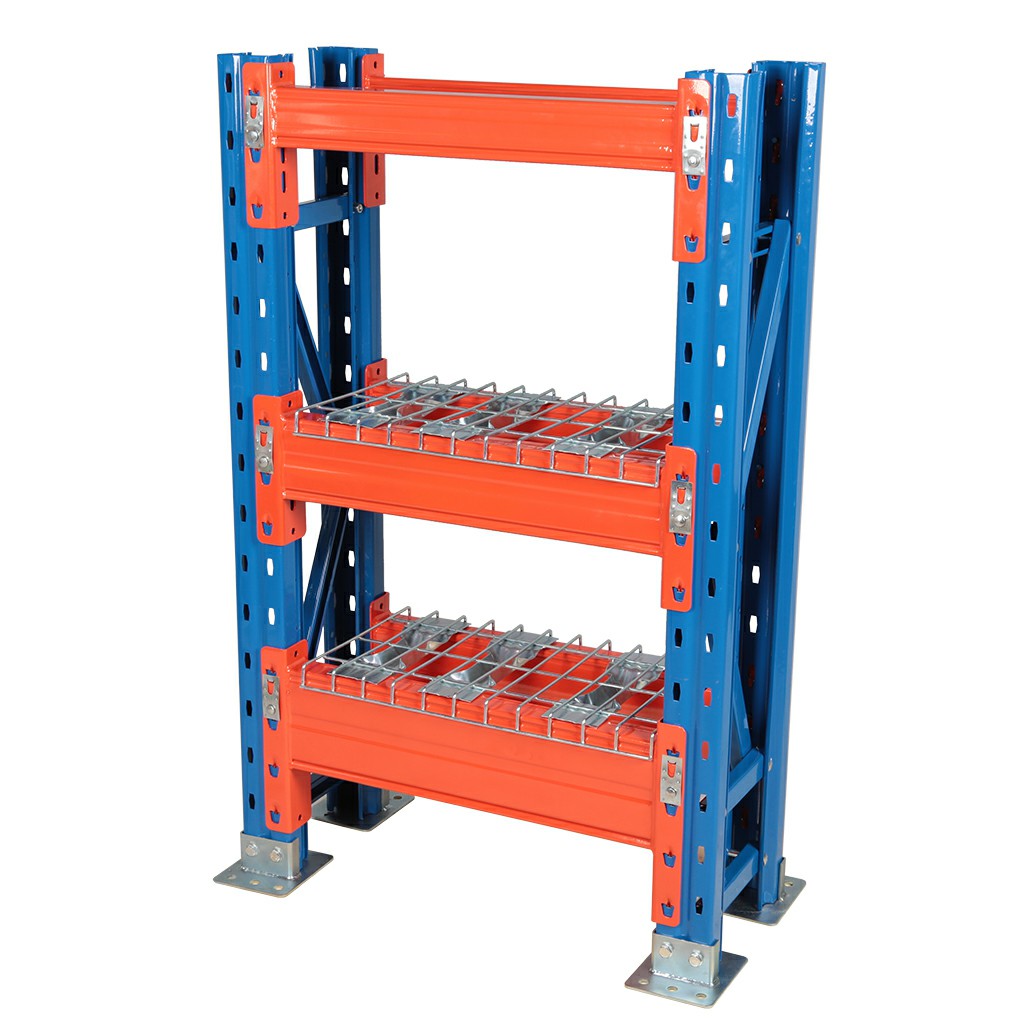
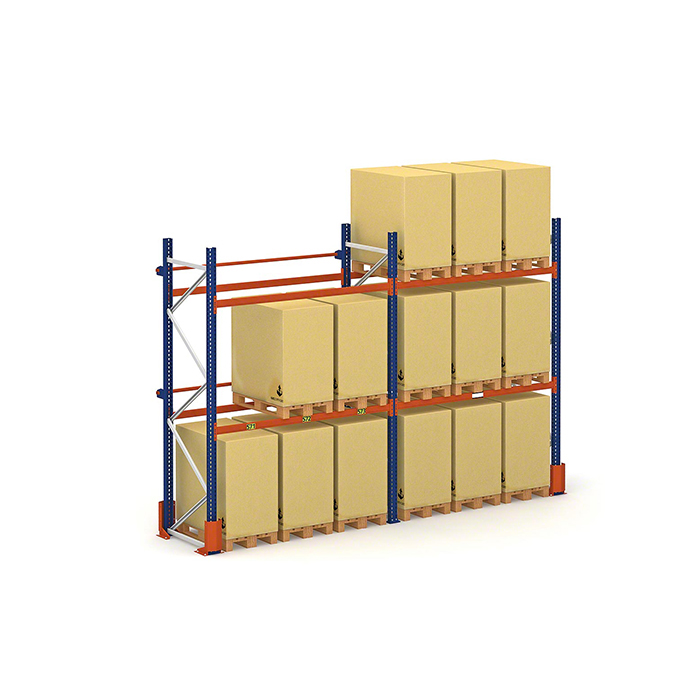
For a new warehouse layout, compare the pallet rack range and the warehouse rack range against the load schedule before choosing a beam level. Products such as heavy-duty warehouse racking for bulk pallet loads and warehouse pallet racking for bulk storage are specified by bay, not by a single headline capacity.
7. OSHA warehousing NEP FAQ
Does the NEP specifically target pallet racking?
No. Racking is not named as a separate target and does not have its own OSHA standard. However, material handling and storage are listed hazards, and damaged, overloaded or unsecured racking can be cited under the General Duty Clause, including conditions observed in plain view.
Are supermarkets still covered by the NEP?
The renewed NEP removed high-hazard retail settings, including supermarkets, from its targeting list. That does not remove other inspection routes, such as complaints, referrals, fatalities or programmed inspections outside the NEP.
Do I need a certified rack inspector?
OSHA does not certify pallet rack inspectors. What matters is that the inspection is carried out by someone competent to compare the installed system with the manufacturer’s instructions, and that findings are recorded and acted on. RMI describes four inspection stages across the rack lifecycle: installation, system, reconfiguration, and post-damage or repair.
Can we move a beam level to fit a taller pallet?
Only after an engineering review. Removing or relocating a beam changes the load path and can cut the system’s capacity dramatically. RMI’s MODEX 2026 example reduced a system from 30,000 pounds to 12,000 pounds after a beam level was removed.
Is heat still part of an OSHA warehouse inspection?
The renewed NEP removed mandatory heat and ergonomic screening, but both remain listed hazards. OSHA may still examine them based on the circumstances of an inspection, such as a complaint, referral or fatality.
Sources
- OSHA, CPL-03-00-026, National Emphasis Program on Warehousing and Distribution Center Operations, effective 31 July 2026.
- Fisher Phillips, OSHA Renews Focus on Warehousing and Distribution Center Safety: 4 Compliance Priorities for Employers, 13 August 2026.
- Hodgson Russ, OSHA Updates and Retools Its National Emphasis Program on Warehousing and Distribution Centers, 14 October 2026.
- Rack Manufacturers Institute, Rack Safety Inspections: MODEX 2026 Insights on Safer Warehouse Racking Systems, 30 August 2026.