


A display cabinet is not a shelf with glass around it. It changes how stock is handled, how customers see the product, and how much refrigeration or lighting the store has to support. This guide covers the decisions that matter before you request a quote.
1. Start with the job the cabinet has to do
Two cabinets can look identical in a catalogue and behave completely differently in a store. Before comparing finishes, write down four things: what goes inside, how often staff restock it, whether the customer opens it, and what the surrounding aisle needs to do.
- Display only: the customer looks through glass; staff access from the back or side.
- Self-service: the customer opens a door or reaches into an open front; hinges and shelf edges take more wear.
- Service counter: staff serve from behind; the working side needs knee space, storage and a clean sightline.
- Hybrid: part of the cabinet displays, part stores backstock; the split must be decided before the frame is built.
This single decision determines the door type, shelf adjustment, lighting position and whether the cabinet needs ventilation. It also tells you whether a display rack or a closed cabinet is the better fit for the category.
If staff have to walk around the cabinet to restock it, the layout is already costing labour. Put the access side on the back-of-house route, not in the customer aisle.
2. Match the cabinet type to the category
Most supermarket floors use four cabinet families. Treat each one as a different tool rather than a style choice.
| Cabinet type | Typical use | What to verify |
|---|---|---|
| Ambient glass cabinet | Bakery, confectionery, tea, gift packs | Glass thickness, shelf load, door clearance, lock |
| Refrigerated display | Deli, dairy, fresh produce, drinks | Temperature range, airflow, defrost, drain route |
| Service counter cabinet | Butcher, bakery counter, deli service | Working height, storage, rear access, hygiene finish |
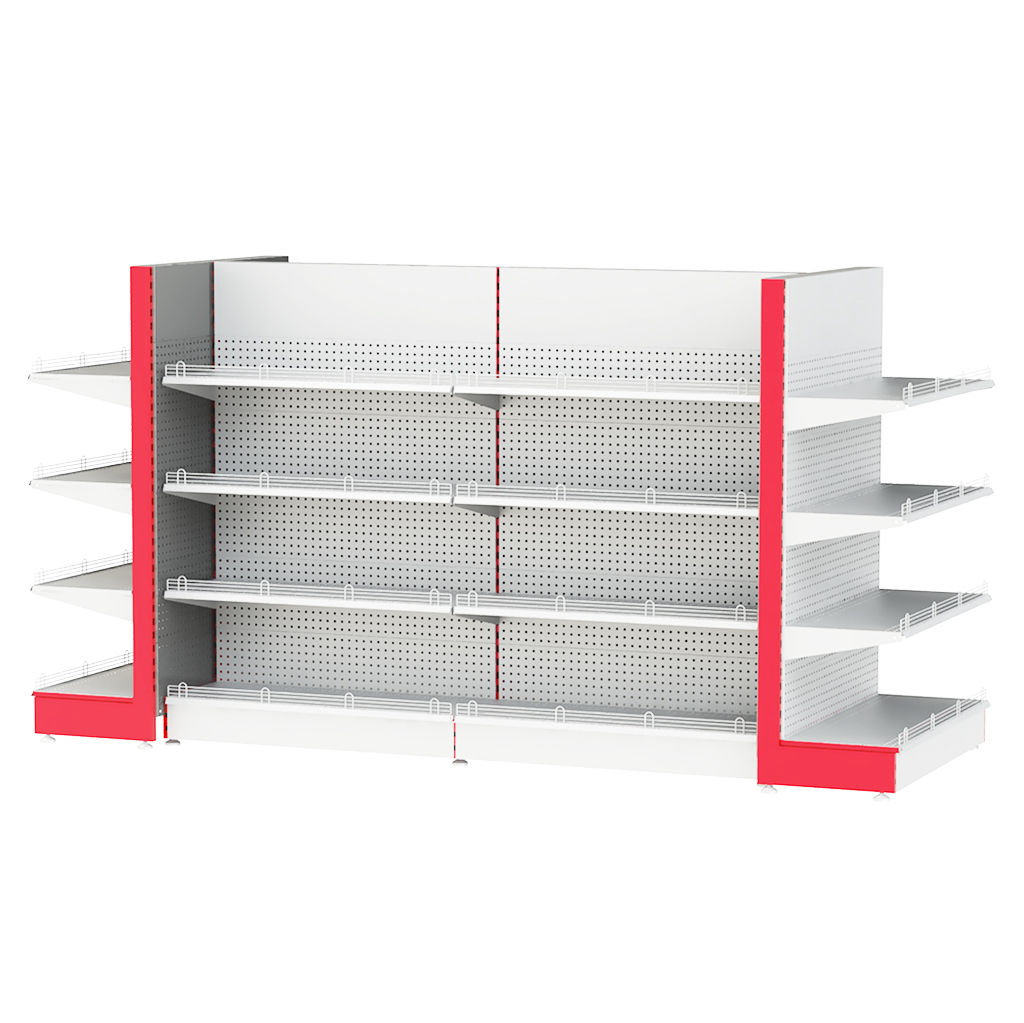
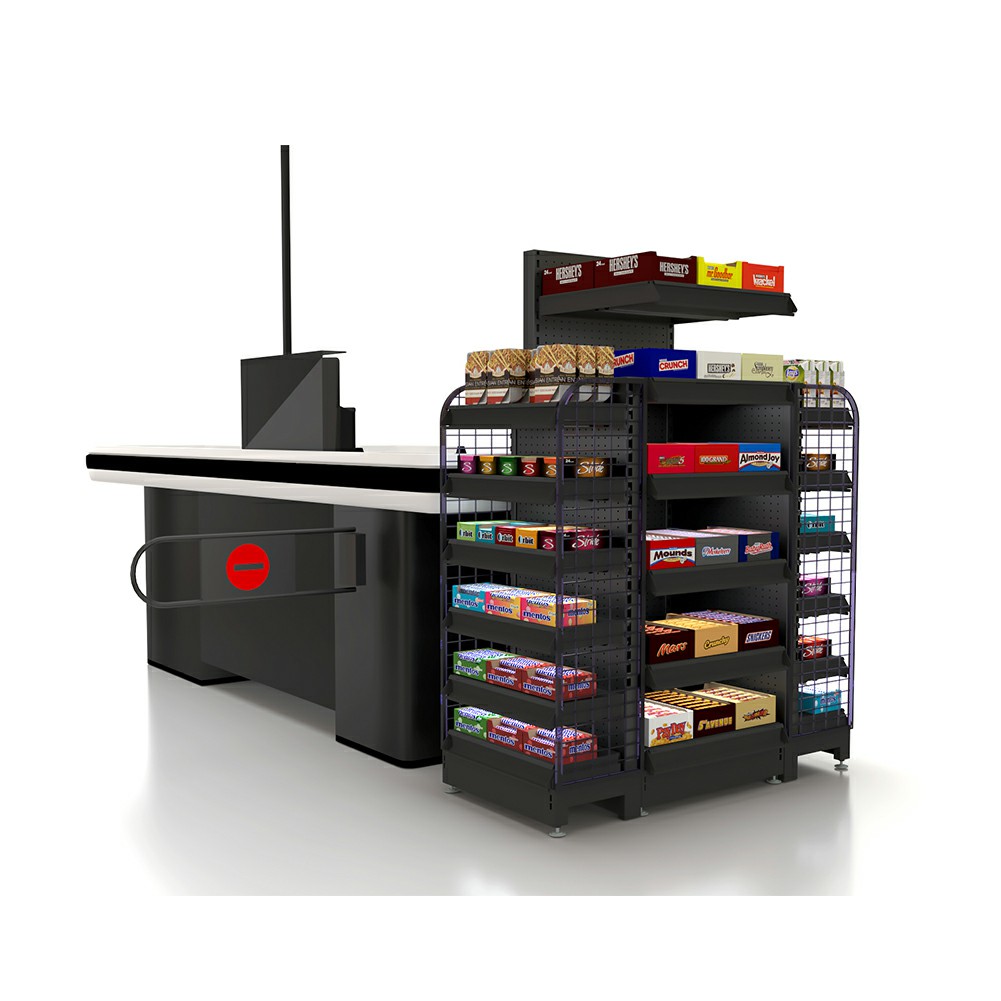
| Wall or island cabinet | Promotions, seasonal displays, impulse buys | Depth, sightline, stability, lighting heat |
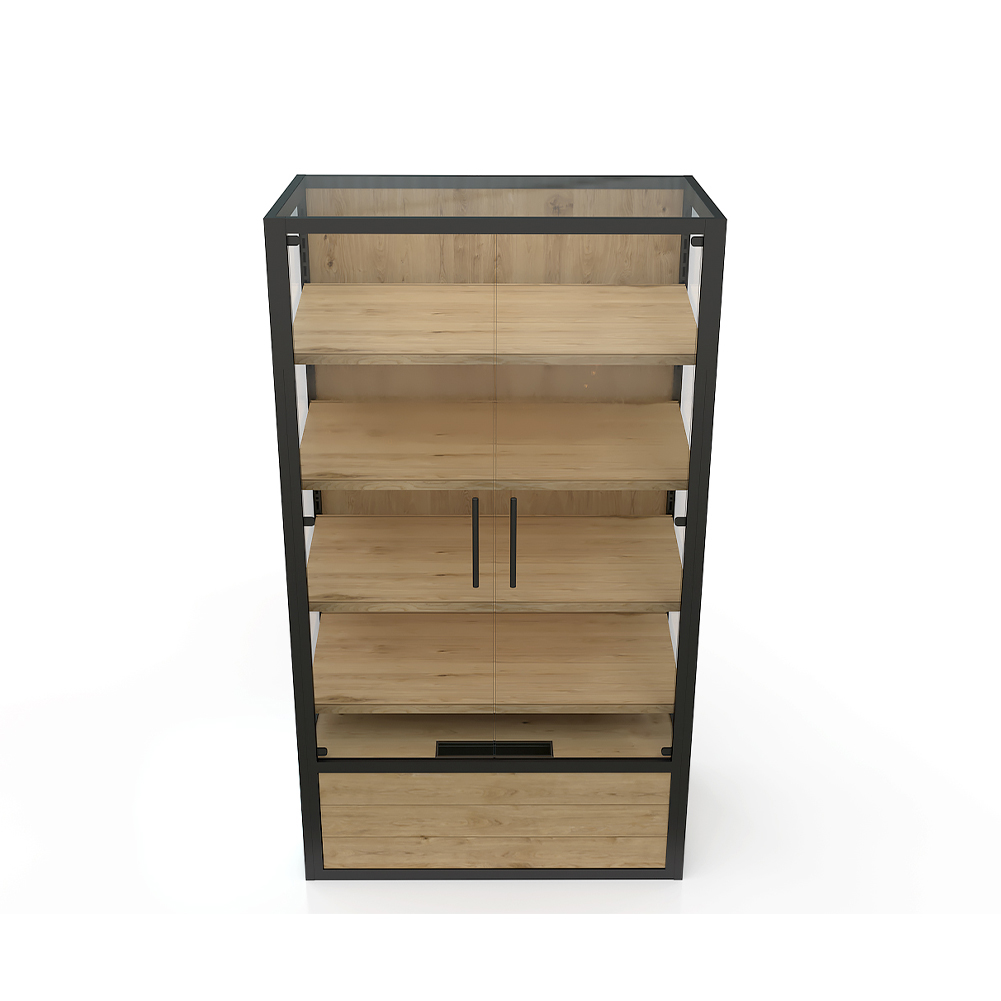
For a bakery or deli, a wood and steel bakery cabinet often has to do both display and service work. For a packaged-goods aisle, a glass-door heavy-duty display rack may be enough. The category should decide the cabinet, not the other way around.
3. Glass, frame and door details
Glass is the most visible part of the cabinet and the easiest place to cut cost invisibly. Ask for the glass type, thickness and edge treatment in writing.
- Tempered glass for doors and shelves where customers lean or reach; ordinary annealed glass is not appropriate for a busy aisle.
- Edge polishing reduces chipping and makes the door safer to handle during cleaning.
- Frame material: aluminium is light and corrosion-resistant; steel is stronger for wide spans; wood or wood-clad frames suit bakery and premium displays but need moisture protection.
- Door type: sliding doors save aisle space; hinged doors give a wider opening but need clearance. Soft-close hinges reduce slamming in self-service areas.
- Locks and handles: a display cabinet for high-value stock needs a lock that staff can use quickly, not a display-only latch.
If the cabinet sits near a wet area or a produce misting line, specify stainless or coated hardware rather than plain steel. The frame is usually the first part to show corrosion.
4. Match refrigeration to the display
A refrigerated cabinet is a system, not a box with a compressor. The display area, evaporator, airflow path and defrost cycle have to work together. Start with the product temperature and the store’s ambient conditions, then size the cabinet.
For fresh produce, an upright chiller with adjustable shelves and good vertical airflow is often more practical than a low island. For frozen food, an upright display freezer keeps the category visible without the reach-in depth of a chest freezer. Compare a two-door upright chiller and an upright display freezer against the category plan before deciding.
- Confirm the temperature range at the warmest shelf, not just at the cabinet set point.
- Check the drain route and whether the floor can take a gravity drain or needs a pump.
- Leave clearance for airflow and service access; a cabinet pushed tight to a wall will not perform as tested.
- Ask how defrost water is handled and how often the cabinet needs manual cleaning.
5. Size the cabinet around the aisle
Cabinet dimensions are usually quoted as width × depth × height. The depth is the number that changes the aisle. A 600 mm deep cabinet and a 700 mm deep cabinet look similar on a drawing but leave different clearances once the door is open.
| Dimension | What it controls | Question to ask |
|---|---|---|
| Width | Module count and run length | Does the width include the frame and door overhang? |
| Depth | Aisle clearance and door swing | What is the clear depth with the door open? |
| Height | Sightline and top-stock use | Can staff reach the top shelf safely? |
| Shelf pitch | Product visibility and capacity | Are shelves adjustable without tools? |
For a new store, mark the cabinet footprint on the floor before you approve the layout. For a refit, measure the door opening, the turn into the aisle and the route from the loading bay. A cabinet that fits the drawing but not the delivery route is an expensive mistake.
6. Lighting and merchandising
Cabinet lighting should make the product readable without turning the glass into a mirror. LED strips at the front of each shelf are usually more effective than a single light at the top, especially in a deep cabinet.
- Use a colour temperature that matches the category: warmer light for bakery and deli, neutral light for fresh produce and packaged goods.
- Keep the light source away from the glass to reduce glare and heat build-up.
- Plan the cable route and driver location before the cabinet is built; retrofitting is harder than specifying it.
- Check that the lighting can be serviced without emptying the cabinet.
For a coordinated look, the cabinet lighting should be specified with the shop shelving and the ceiling lighting, not after both are installed.
7. Build a specification before you ask for quotes
A useful enquiry gives the supplier enough information to quote the same thing twice. Include:
- Category, product size and required temperature range.
- Width, depth and height for each cabinet, plus the quantity and module combination.
- Glass type, frame finish, door type and lock requirement.
- Shelf count, load per shelf and adjustment method.
- Lighting, cable route and switch location.
- Delivery destination, site access and whether installation is included.
- Any certification or test report the project requires.
If you are still choosing the shelving layout, start with the supermarket shelving guide and then add the cabinets to the same plan. That avoids buying a cabinet that blocks the aisle or duplicates storage you already have.
8. Supermarket display cabinet FAQ
What is the difference between a display cabinet and a display rack?
A display rack is usually open and designed for quick visual access; a display cabinet is enclosed, often with glass doors, and protects the product from dust, handling or temperature. The choice depends on the category and how much control the store needs.
Do I need tempered glass for a supermarket cabinet?
For any door or shelf that customers or staff may lean on, specify tempered glass. It is more resistant to impact and breaks into safer pieces than ordinary glass.
Can a refrigerated cabinet be used for ambient products?
It can physically hold them, but running refrigeration for ambient stock wastes energy and can dry out packaging. Use an ambient cabinet unless the category needs temperature control.
How deep should a display cabinet be?
Depth follows the product and the aisle. Measure the clear aisle with the door open, not just the closed cabinet. A 600–700 mm cabinet is common for supermarket displays, but the drawing should decide the final number.
What should I ask before approving the sample?
Check the glass type, frame finish, door alignment, shelf adjustment, lighting, lock and the temperature pull-down if refrigerated. Test the cabinet with the actual product and the actual loading pattern.